Standards & Regulations
Environmental noise monitoring is governed by international standards and local regulations. Understanding these requirements is essential for selecting the right system.
IEC 61672-1
Sound Level Meters
Requirements for sound measuring instruments. Class 1 required for regulatory and environmental measurements.
ISO 1996
Environmental Noise Assessment
Methodology for environmental noise assessment including parameters, procedures, and reporting.
EU Directive 2002/49/EC
Noise Mapping
European directive for assessment and management of environmental noise. Requires noise maps and action plans.
ICAO Annex 16
Aircraft Noise
International standards for aircraft noise monitoring and noise certification.
ISO 9612
Occupational Noise
Determination of occupational noise exposure. Required for workplace safety assessments.
WHO Guidelines
Noise Exposure Limits
World Health Organization guidelines for reducing health effects from environmental noise.
Key Parameters
Understanding noise measurement parameters is essential for interpreting results and regulatory compliance.
LAeq
A-weighted Equivalent Level
Average sound level over measurement period. Primary metric for most regulations.
Lden
Day-Evening-Night Index
24-hour index with penalties for evening (+5 dB) and night (+10 dB). Used in EU Directive.
Lnight
Night Level
LAeq during night period (typically 23:00-07:00). Important for sleep disturbance assessment.
LAmax
Maximum Level
Highest sound level during measurement. Important for individual noise events like aircraft flyovers.
SEL
Sound Exposure Level
Total sound energy of a single event normalized to one second. Used for comparing events.
L10, L90
Statistical Levels
Levels exceeded 10% and 90% of time. L10 for peaks, L90 for background noise.
Equipment Selection
Select the right equipment based on monitoring type (temporary or permanent) and application requirements.
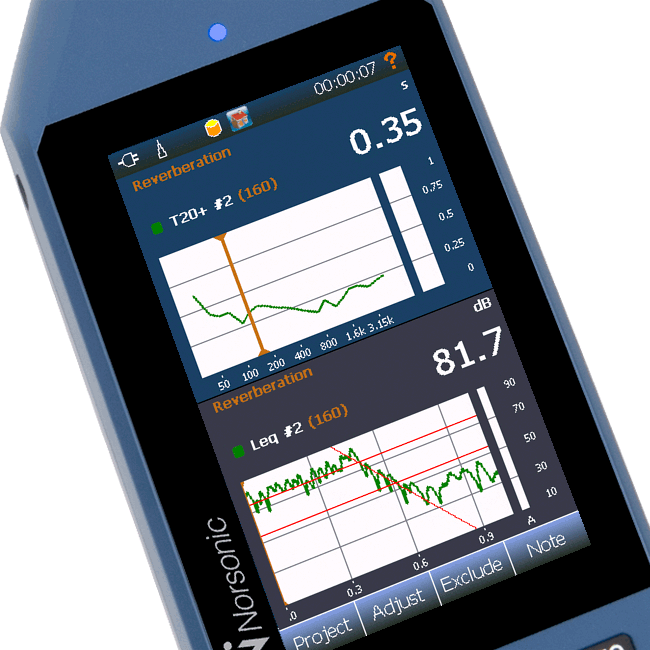
For short-term projects, complaint investigations, and environmental impact assessments.
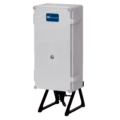
For permanent installations at airports, industrial areas, and major roads.
Remote data management, alerts, and reporting.
Applications
Noise monitoring systems have broad applications in environmental, industrial, and transportation sectors.
Airport Noise Monitoring
ICAO-compliant permanent monitoring with flight correlation, community reporting, and automated alerts. Measure LAmax and SEL for each aircraft event.
Construction Site Monitoring
Permit compliance verification with real-time alerts and audio recording. Short to medium-term measurements.
Industrial Perimeter
Continuous boundary monitoring with source identification using Nor1297. Environmental permit compliance.
Road & Rail Traffic
EU Directive 2002/49/EC compliant traffic noise monitoring. Lden and Lnight calculation.
Wind Farms
Long-term noise monitoring for planning compliance and complaint management. Correlate noise with wind speed and direction.
Smart City Networks
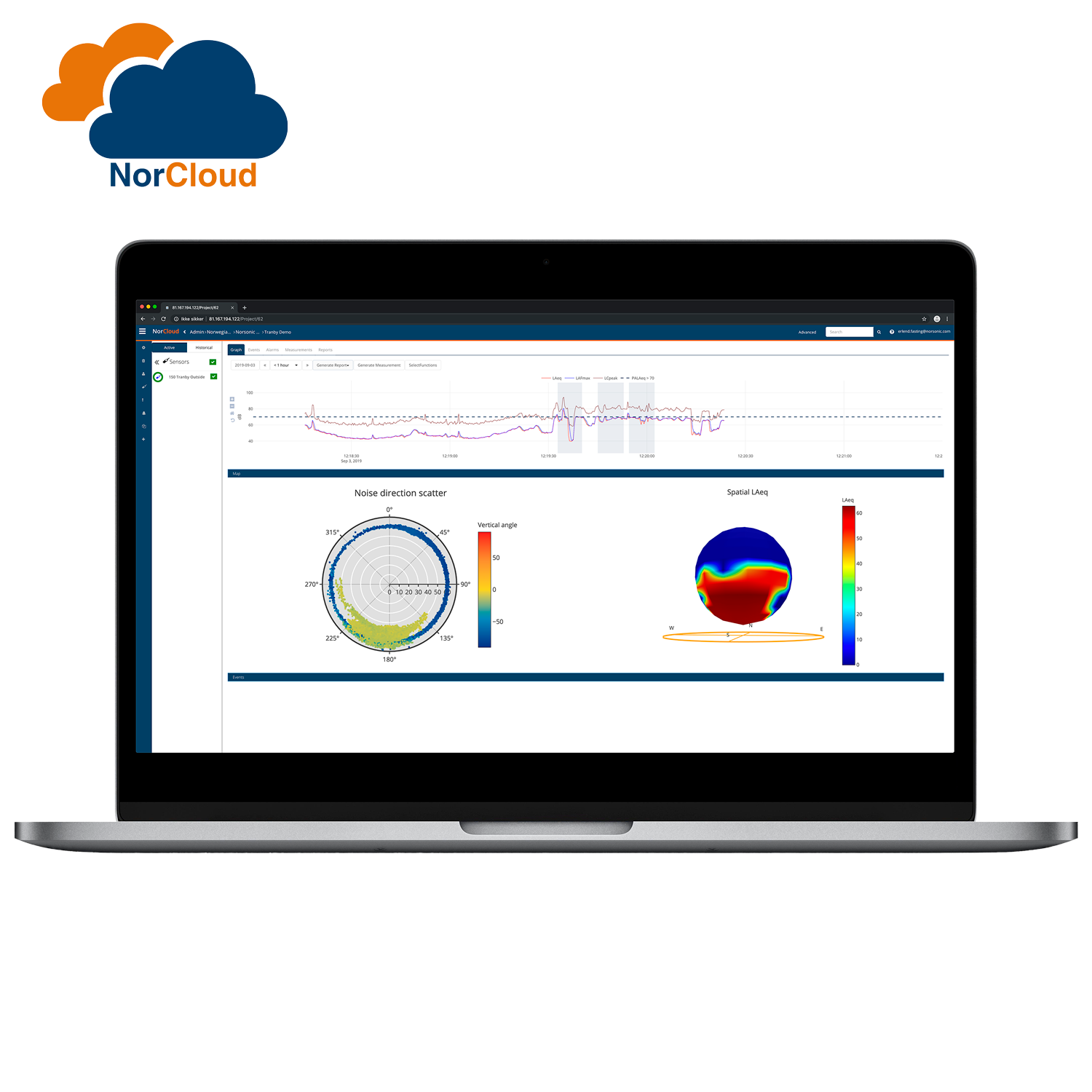
Multi-site environmental monitoring with centralized management via NorCloud. Real-time noise maps.
Intelligent Noise Monitoring: NorCloud with NoiseCompass and NoiseTag
The NorCloud Environmental Measurement platform turns monitoring terminals into an intelligent system: NoiseCompass (Nor1297) determines the direction of arrival of noise, and NoiseTag automatically classifies noise sources using AI. Together they answer not just “how loud?” but “where is it coming from, and what is it?” — exactly what environmental consultants, utilities, ports, airports, construction sites and regulators need.
NoiseCompass (Nor1297) — direction of arrival
The Nor1297 adds a microphone array that identifies the bearing from which noise arrives at the monitoring terminal. This separates the source of interest from background noise and provides defensible directional evidence in complaint and compliance disputes.
NoiseTag — AI source classification
NoiseTag uses AI to automatically classify noise sources — traffic, aircraft, construction, industry and more — directly in NorCloud. This cuts manual analysis and makes long-duration compliance reporting actionable.
NorCloud Environmental Measurement platform
Implementation Procedures
Follow these steps to set up and operate a noise monitoring system correctly.
- 1Select location representative of exposure to be measured (typically 4m height, away from reflecting surfaces)
- 2Mount station on suitable pole or surface
- 3Connect power source (mains or solar)
- 4Configure connectivity (4G or Ethernet)
- 5Calibrate microphone using acoustic calibrator
- 6Verify NorCloud connection
- 1Define measurement periods (typically 1 hour for environmental, 15 min for construction)
- 2Set alert thresholds according to permit requirements
- 3Configure audio recording for events (optional)
- 4Select parameters to calculate (LAeq, LAmax, Ln)
- 5Test alert system
- 1Monitor real-time data via NorCloud
- 2Review alerts and audio recordings
- 3Generate periodic reports (daily, weekly, monthly)
- 4Export data for additional analysis if needed
- 5Archive data for long-term compliance